The end of Ruben Amorim’s tenure at Manchester United raised more questions than it answered. Fourteen months after his appointment, the club found itself in a familiar position: another managerial change, and fresh uncertainty over who truly sets the football direction. What went wrong, and how long will recovery take?
To understand the Amorim era, it helps to start with the environment that produced it. That means revisiting United’s last stretch of relative stability: the final months of Ole Gunnar Solskjær’s reign in 2021.
2020-21
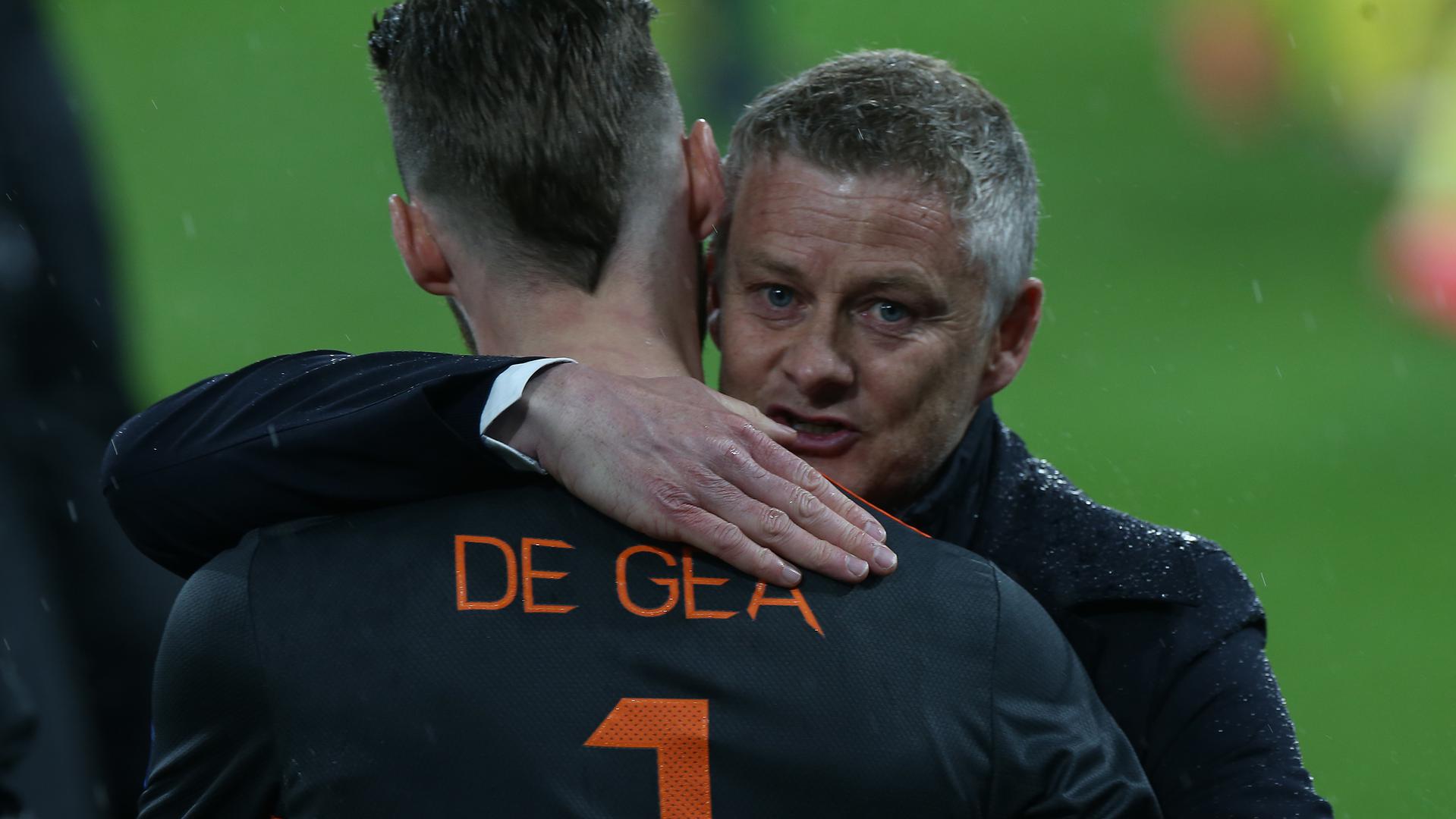
In March 2021, Manchester United had announced the appointment of John Murtough as Football Director, and Darren Fletcher as Technical Director. The appointment of a football director was a first for Manchester United, and long overdue, as it had been announced in August 2018 that the club was looking to appoint someone to the role1. 31 months later, United had internally promoted Murtough, who had no prior experience in a similar role, to the position.
Shortly after the appointment of Murtough and Fletcher, the European Super League fiasco ensued. Long-time CEO Ed Woodward announced his resignation in April 2021, but remaining in his role until a successor was appointed.
United had finished the 2020-21 season in second place in the Premier League, behind Manchester City, and had reached the final of the UEFA Europa League, losing to Villarreal in an excruciating penalty shootout. The loss to Villarreal was a bitter pill to swallow for the fans, and for Solskjær, as he had come so close to winning his first trophy as Manchester United manager.
2021-22

Initially, the 2021 summer transfer window had looked promising, with the signings of Raphael Varane from Real Madrid and long-time target Jadon Sancho from Borussia Dortmund, but without the central midfielder they desperately needed. A situation arose which would ultimately contribute to the dismissal of Solskjær in November 2021. Former Manchester United player Cristiano Ronaldo was eager to leave Juventus, and signs had started pointing towards a transfer to United’s cross-city rivals, Manchester City. In a dramatic turn of events, Ronaldo agreed to join Manchester United on transfer deadline day. The return of Ronaldo at Old Trafford was met with excitement and anticipation, and for the ninety minutes in which Newcastle United visited Old Trafford for Ronaldo’s second debut, the feeling around the club was euphoric.
The presence of Ronaldo, a player of immense stature and influence, arguably disrupted the balance of the team and the tactical approach that Solskjær and his staff had been trying to implement. In November 2021, following a string of poor results, Solskjær was dismissed as Manchester United manager, and Ralf Rangnick was appointed as interim manager for the remainder of the season, with a view to a permanent appointment as an advisor.
The Rangnick era was filled with uncertainty and mixed results, and ultimately failed to deliver the desired stability and progress. However, it allowed Manchester United to regroup and plan for the future. Following a comprehensive search, involving Football Director Murtough and Technical Director Fletcher, Manchester United announced the appointment of Ajax manager Erik ten Hag, set to take over in the summer of 2022. After scathing comments about the state of the squad, Rangnick’s anticipated permanent role at the club was quietly dropped.
2022-23
CEO Richard Arnold had taken over from Woodward in February 2022, and with the appointment of ten Hag, Manchester United seemed to be entering a new era. At the start of the 2022-23 season, United had signed several new players to fit ten Hag’s vision, including Lisandro Martínez from ten Hag’s old club Ajax, Tyrell Malacia from PSV Eindhoven, and Christian Eriksen on a free transfer. Ten Hag also tasked the club with further strengthening the squad in the key areas of central midfield and right-wing. A summer transfer saga followed in which United repeatedly tried and failed to sign ten Hag’s former Ajax midfielder Frenkie de Jong from FC Barcelona. It wasn’t Barcelona’s reluctance to sell that prevented the transfer, as a fee had been agreed with the financially struggling Barça. Instead, it was de Jong himself who had no desire to leave Barcelona.
The 2022-23 season started very poorly for United, with the a 1-2 loss to Brighton & Hove Albion on the opening day of the Premier League, followed by a humiliating 0-4 loss to Brentford. The alarm bells were ringing loud and clear at United, and they finally admitted defeat in the pursuit of de Jong, and signed Real Madrid’s 29 year-old Brazilian midfielder Casemiro for £60m plus £10m in add-ons instead. On transfer deadline day, United signed Casemiro’s compatriot and another one of ten Hag’s former players Antony from Ajax for £82m, finally giving ten Hag the right-wing option he asked for, but at a significantly higher cost than his perceived market value.
A sense of optimism was slowly returning to Old Trafford, but there was one glaring issue with United’s performances: Ronaldo did not fit ten Hag’s system, and despite several attempts by ten Hag to please Ronaldo, it was clear that Ronaldo was not happy. Following a public sign of dissatisfaction from Ronaldo during a substitute appearance against Tottenham Hotspur, Ronaldo gave an interview in which he said he had no respect for ten Hag and criticised the club’s ambitions and the state of the club’s infrastructure.
“Nothing has changed”
- Ronaldo’s damning verdict on the facilities at United, criticising the lack of development of the gym, pool, technology and catering at United’s Carrington training ground.
On 22 November 2022, the club released a statement announcing that Ronaldo’s contract had been terminated by mutual consent, with immediate effect2. Mere hours later, United announced that the club was starting a “process to explore strategic alternatives to enhance the club’s growth3”, largely understood to mean a partial or full sale of the club.
We have a terrific new manager, and we see can all see recent progress on the field. So, conclude your review process as quickly as possible, identify the best new ownership for the Football Club, and get the sale done so Erik ten Hag has the certainty he needs to invest in the playing squad and we bring in the much needed investment for the stadium to restore Manchester United to its proper position.4
- Manchester United Supporters Trust statement on the club’s strategic alternatives process, November 2022
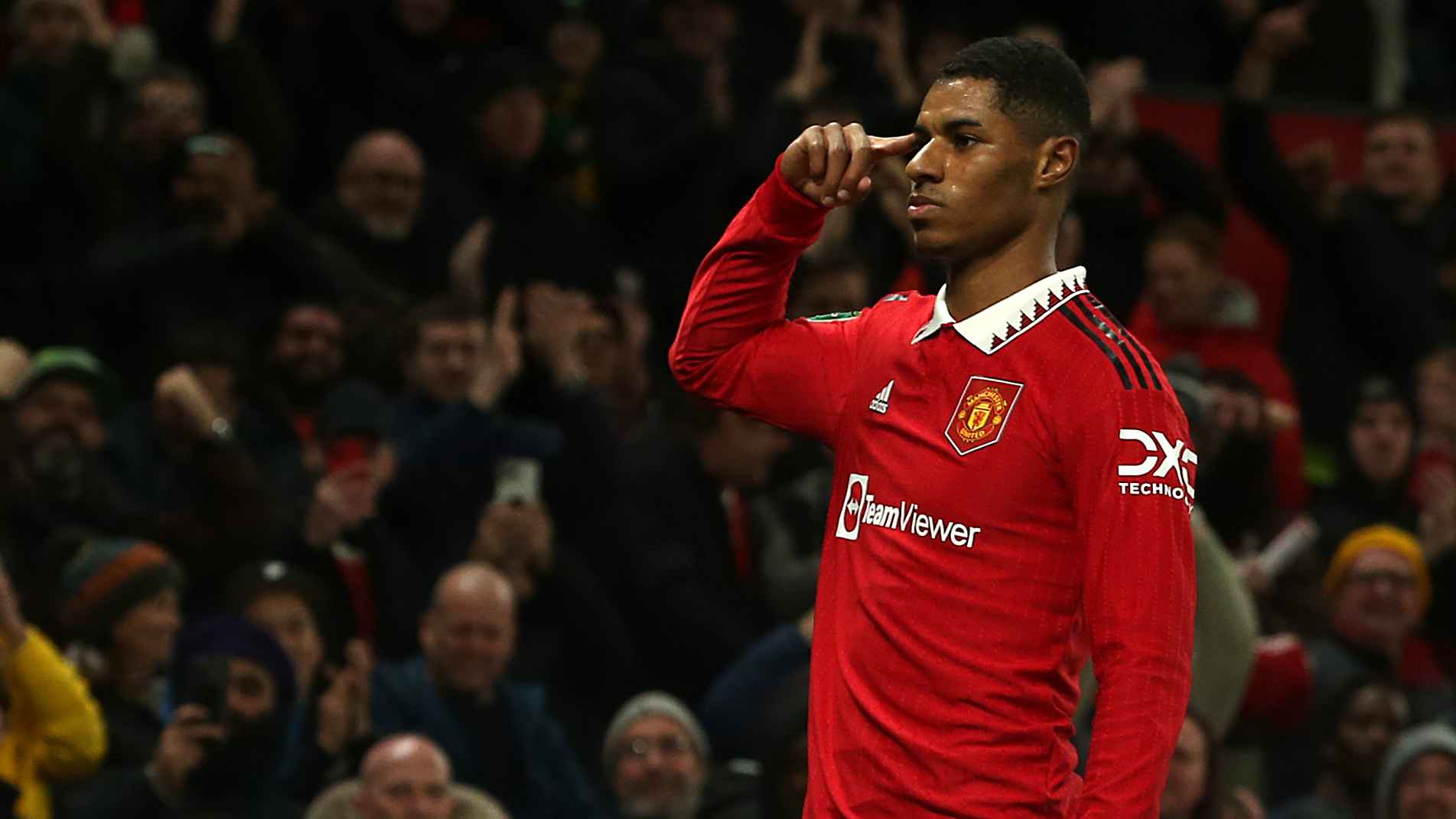
Whilst United fans were optimistic at the news that the Glazer family could be on their way out, there was adamant support for Erik ten Hag. Between December 2022 and February 2023, United entered a purple patch of form, fueled by Marcus Rashford’s goal-scoring streaks. The peaks of this purple patch were the UEFA Europa League two-legged round of 32 victory over FC Barcelona, and the League Cup final victory over Newcastle United in February 2023, which gave ten Hag his first trophy as Manchester United manager, and United its first trophy since winning the UEFA Europa League in 2017. However, following the League Cup victory, United’s form dipped again, and the club found itself in a battle for a top-four finish in the Premier League, ultimately finishing third to ensure Champions League football for the 2023-24 season.
2023-24
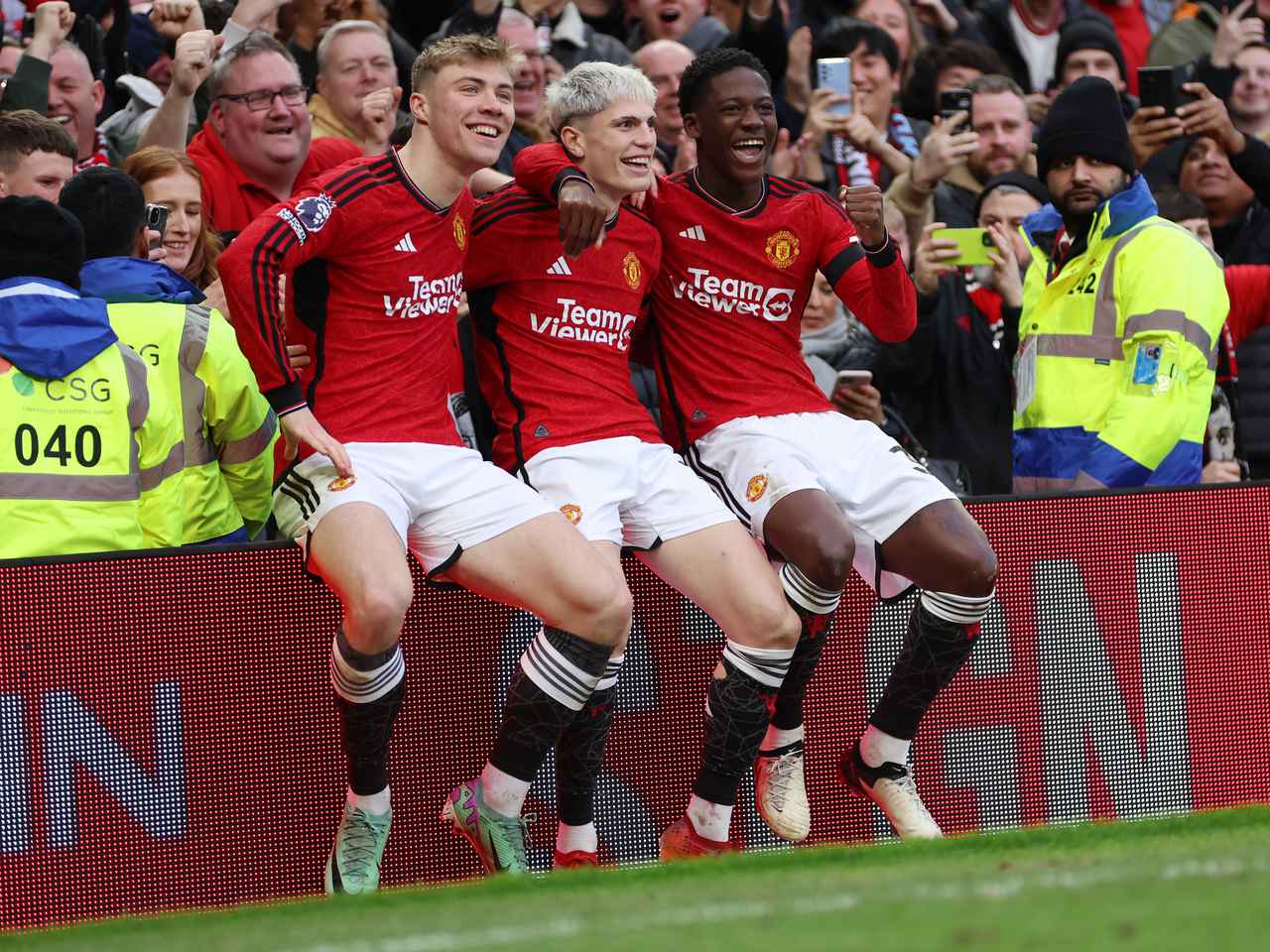
With the takeover story lingering still around the club, the 2023 summer transfer window opened. A deal was agreed for Chelsea’s Mason Mount for a hefty £55m fee. Ten Hag wanted a new centre-forward, with Harry Kane emerging as the top target, but United ultimately signed 21-year-old Rasmus Hojlund for £64m instead. Following the expiration of long-time servant David de Gea’s contract, ten Hag’s former Ajax goalkeeper Andre Onana was signed from Inter Milan for £43m. An additional goalkeeper was signed in the form of Altay Bayindir. Club captain Harry Maguire, whose had struggled for game time under ten Hag, was stripped of the captaincy, which was handed to Bruno Fernandes instead. Maguire was being urged to find a new club, but preferred to stay at United.
United’s 2023-24 season was rocky from the start. Onana’s errors almost single-handedly cost United the possibility of progressing from the group stage of the Champions League. Other signings also struggled to make an impact, with Hojlund failing to live up to expectations, and Mount battling constant injuries. A feud with the manager saw Sancho banished from the first team, and later loaned to his former club Borussia Dortmund for the rest of the season. The bright spots of the season were the emergence of young talent such as Alejandro Garnacho and Kobbie Mainoo in the first team, being promoted from the academy.
Halfway through the season, the takeover saga came to a conclusion, with the announcement that Sir Jim Ratcliffe’s INEOS group had acquired a minority stake in the club, with the Glazer family retaining the majority of the voting shares, but handing over operational control of the club to INEOS.
It did not take long for INEOS to start making their presence felt at the club. Arnold and Murtough subsequently left the club, but Fletcher stayed on. It was made known that Omar Berrada, COO at Manchester City’s City Football Group, would be joining Manchester United as CEO in the summer of 2024. Highly regarded Director of Football Dan Ashworth had resigned from his position at Newcastle and would join United after his notice period. Their appointments seemed to follow INEOS’ stated ambition to fill positions with individuals who were “best in class”. The club was quickly found by INEOS to be in need of job and spending cuts, with hundreds of backroom staff being made redundant. The mood at the club, especially after the initial enthusiasm of INEOS arrival, was slowly deflating.
In April 2024, Jason Wilcox, formerly of Manchester City, left his role at Southampton to become Technical Director at Manchester United. As Berrada and Ashworth were still serving their notices, Wilcox was INEOS’ first permanent new appointment at the club. He observed the end of the 2023-24 season under ten Hag, which had started to unravel despite progress in the FA Cup in dramatic fashion in matches against Liverpool and Coventry City. A low point was reached when United lost 4-0 away at Crystal Palace, and it seemed that ten Hag’s position was becoming untenable. United languished in eighth place in the Premier League, no longer able to qualify for European football through their league position.
The last match of United’s season was the FA Cup final against Manchester City, a replay of the previous season’s FA Cup final, with United desperate for revenge despite being considered overwhelming underdogs. Had United performed as they had been recently, they would have surely been heavily defeated, but with thanks in part to Fletcher convincing ten Hag that he needed to change his tactics, United managed to pull off a shock 2-1 victory over their neighbours, with United’s goals scored by the young academy graduates Mainoo and Garnacho. United fans were elated, and fan opinions of ten Hag after the FA Cup final improved dramatically. The FA Cup win also secured United qualification for the 2024-25 UEFA Europa League.
2024-25
Despite having started a process to find a replacement for ten Hag before the FA Cup final, INEOS decided not to go against fan sentiment, and retained ten Hag as manager. Given that ten Hag would be entering the final year of his contract, as a sign of support, Manchester United triggered the year-long extension clause in his contract, which would now keep him at the club until the summer of 2026. Prior to this decision, they had made contact with with several high-profile managers, including Thomas Tuchel and Roberto de Zerbi. It ultimately transpired that Tuchel was not interested in the job after meeting with the club’s hierarchy, whilst de Zerbi’s wage demands were considered excessive. The club had also considered the highly-rated Sporting CP manager Ruben Amorim.
Ten Hag was backed in the summer transfer window by the new footballing hierarchy at the club, with Ashworth and Berrada now having taken up their positions. The new regime’s feeling was that ten Hag’s tenure might improve with the correct footballing hierarchy supporting him. More of ten Hag’s former Ajax players, Noussair Mazraoui and Matthijs de Ligt, were signed from Bayern Munich. Highly-rated young centre-back Leny Yoro was signed, as well as Joshua Zirkzee from Bologna. Manuel Ugarte was signed from Paris Saint Germain, having only spent a year in France after being signed from Sporting CP, where he played under Amorim. The signings were seen as a statement of intent from INEOS, who were keen to show that they were willing to invest in the squad, and that they wanted to build a young squad.
However, academy graduate Scott McTominay was sold to Napoli in order to raise funds, with ten Hag reportedly unhappy with the sale. McTominay would subsequently go on to win the Serie A title with Napoli that season, and be nominated for the Ballon d’Or.
The optimism surrounding ten Hag’s retention and the new signings would prove to be short-lived. The 2024-25 season began poorly for Manchester United, with the team struggling to find any consistency or rhythm. Despite the backing from INEOS and the new footballing structure, United found themselves languishing in 14th place in the Premier League after nine games, albeit only four points off the top four. Progress in the UEFA Europa League was looking probable, but still too uncertain, considering the level of opposition faced.
Amorim’s Appointment
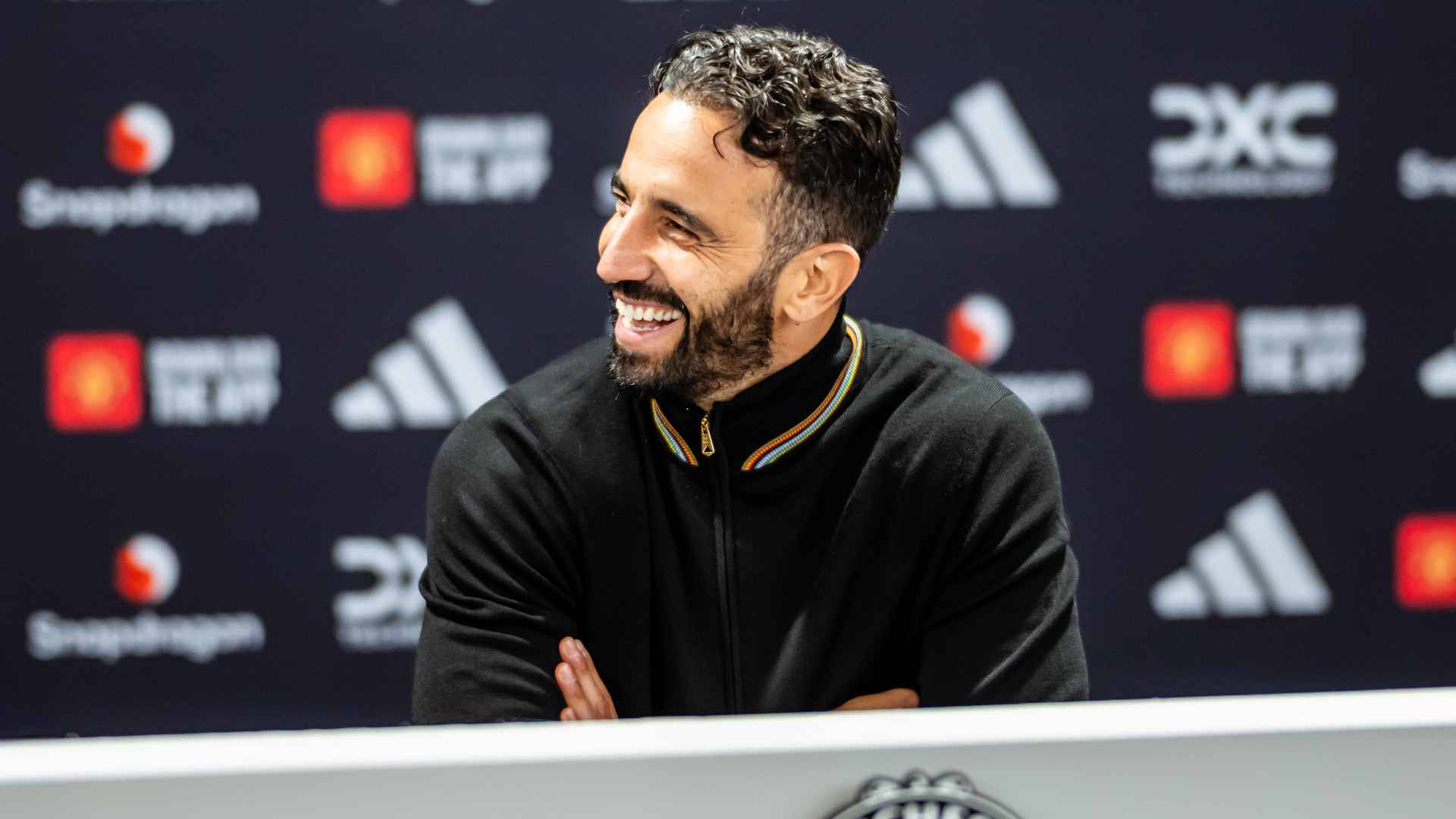
“Belief is the cornerstone of my philosophy. I know you don’t believe in these players, but I do.”
— Ruben Amorim, November 2024
On 28 October 2024, Manchester United announced that ten Hag had been dismissed as manager. The decision, while not entirely surprising given the poor results, marked the end of ten Hag’s tumultuous two-and-a-half-year tenure at Old Trafford. Manchester United had already been monitoring several candidates, and this time they moved decisively for Amorim. On 1 November 2024, United announced that they had appointed Amorim as their first head coach on a contract running until 2027. Critically, Amorim was given the title of “head coach” rather than “manager”, signalling a shift in the club’s approach to footballing operations, with greater control being vested in the Director of Football and Technical Director.
Behind the scenes, Amorim had been reluctant to join United mid-season. United’s football hierarchy, however, made it clear to Amorim that this was a one time offer, and eventually convinced him to take the job. Sporting CP had been on a great run, including a win in the Champions League over Manchester City.
Amorim’s arrival at Old Trafford was met with optimism from United fans, despite the disappointment at yet another change. The Portuguese coach brought with him a reputation his unwavering commitment to his preferred 3-4-3 formation, and a track record of developing young players. His success at Sporting CP, where he had won two Primeira Liga titles and transformed the club’s fortunes, suggested that he could be the man to finally restore Manchester United to their former glory.
Amorim’s appointment should have been seen as an example of what can be achieved when the club is led by a team that is “best in class”, as INEOS had stated when they took operational control of the club. CEO Berrada, Director of Football Ashworth, and Technical Director Wilcox should all have been aligned in their vision for the club.
United didn’t just hire a coach; they stress-tested their new structure on the hardest possible setting: mid-season, identity-first, system-heavy.
Amorim’s tenure at Manchester United would prove to be fraught with challenges from the very beginning. The Portuguese manager’s insistence on implementing his preferred three-at-the-back system created immediate tactical difficulties, as the United squad was not ideally suited to this formation. His tactical inflexibility became a source of frustration among supporters, as results failed to improve despite the change in management.
The first sign of trouble came in December 2024, when it had been announced that Ashworth would be leaving the club with immediate effect. The message from the club was that Ashworth had not been the right fit, and not wanting to prolong a situation that was not working, they’d decided to act swiftly. Behind the scenes, it has been reported that Ashworth had not been fully on board with the appointment of Amorim. Barrada had been identified as the catalyst for Amorim’s appointment, with Wilcox reportedly having reservations about whether Amorim’s system would work in the Premier League, but ultimately agreeing with the decision to hire Amorim. Ashworth, however, had recommended hiring a Premier League-experienced manager, suggesting names such as then-Brentford manager Thomas Frank. The disagreement over the managerial appointment ultimately led to Ashworth’s dismissal.
The early highlight of Amorim’s tenure was the 2-1 victory over Manchester City, but the prelude to that match had been Rashford’s omission from the squad, with Amorim stating that Rashford had not met the required standards.
In the January transfer window, Rashford was loaned out to Aston Villa, whilst youngsters Ayden Heaven and Patrick Dorgu were signed. Dorgu, a left wing-back, was identified as a player who could fit well into Amorim’s system.
The 2024-25 season continued to be a struggle under Amorim, with United failing to find any positive consistency. Whilst the Premier League campaign had been fraught with bad results which made qualification for European football through the league position near impossible, there was one bright spot: Manchester United’s run to the UEFA Europa League final. United had put all their eggs in the Europa League basket, their only realistic chance to qualify for European football. Performances were anything but routine, such as the dramatic quarter-final comeback victory in extra time against Lyon, or the decisive semi-final wins over Athletic Bilbao, which saw United win 5-1 on aggregate.
“Tonight is about dealing with the pain.”
— Ruben Amorim, after the Europa League final defeat to Tottenham Hotspur
United’s season rested on the Europa League final against Tottenham Hotspur, a team United had already lost to three times already that season. No one would argue that victory would have made up for United’s worst ever Premier League campaign, but the financial and sporting implications of winning the Europa League were significant. A place in the lucrative Champions League group stage would be secured, alongside the prestige of winning a European trophy.
On the night, United lost 1-0 in a miserable game football. The sole goal was scored off a deflection, Tottenham were happy to sit back whilst United failed to equalise. Amorim’s perceived lack of tactical adaptability was called into question. Garnacho, who had helped United reach the final, was left out of the starting XI, and made his dissatisfaction clear on social media. This ultimately led to a falling out between Amorim and Garnacho, with Garnacho being told he would not play for United under Amorim again.
If Amorim had been sacked following the Europa League final defeat, it would not have come as a too big of a surprise. However, the club backed Amorim, and repeated the message, that the first partial season under Amorim had been a way for the team to get a head start on implementing his ideas, and that with a summer transfer window and a full pre-season, the actual progress would be seen in the 2025-26 season.
2025-26
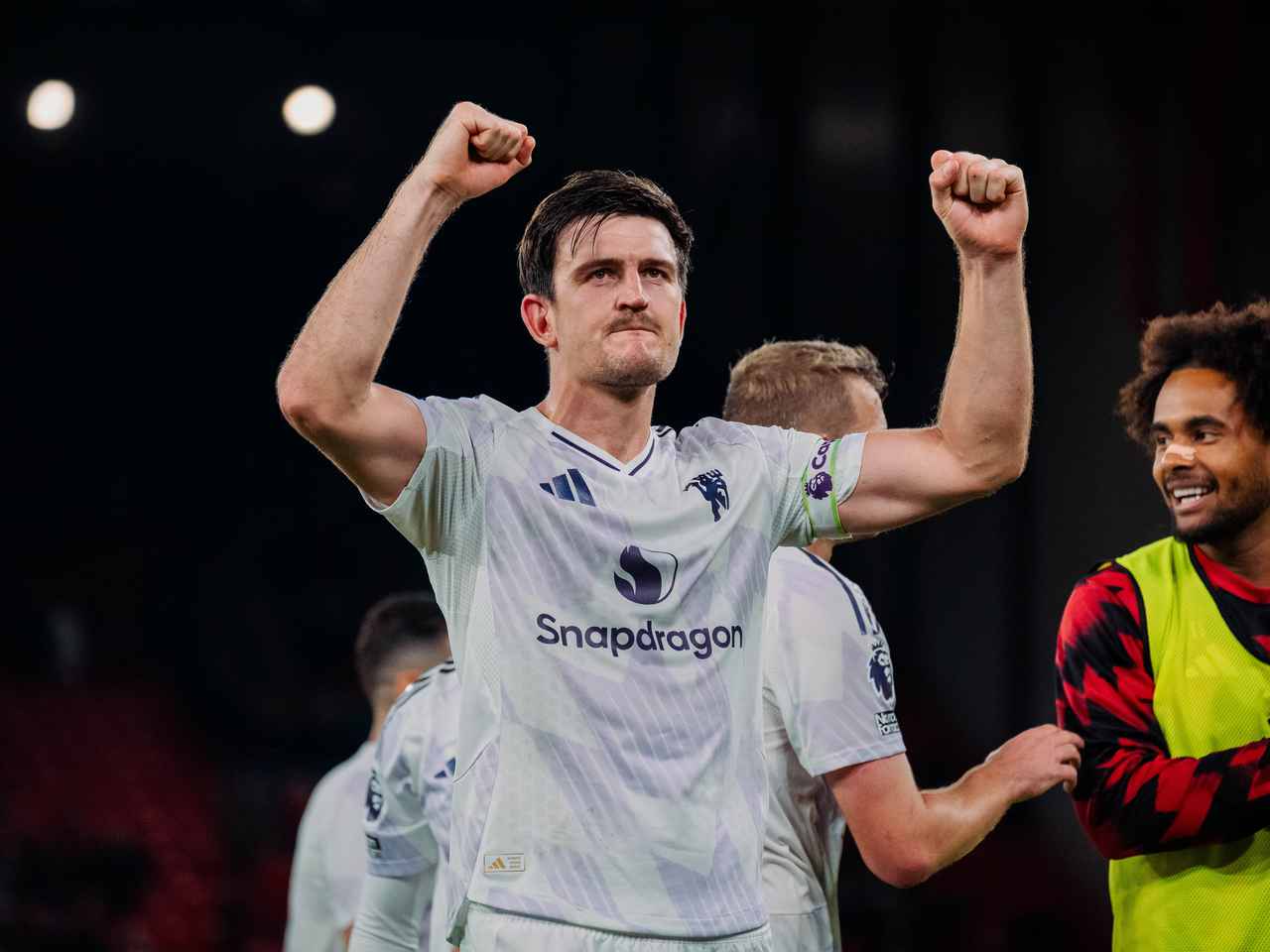
In the summer transfer window, United moved early for attacking reinforcements, signing Matheus Cunha from Wolves and Bryan Mbeumo from Brentford despite competition from Champions League side Newcastle. Benjamin Šeško was viewed internally as an upgrade on Højlund. Despite wanting to stay and fight for his place, Højlund was moved on to Napoli.
To improve squad harmony and raise funds, Amorim had identified a group of players he wanted moved on and kept separate from the first-team picture. That list included academy graduates Rashford and Garnacho, alongside Sancho and Malacia. All were moved on except Malacia.
Pre-season had felt like a clean slate after the disastrous previous campaign, and there were early hints of progress. United opened the league season at home to Arsenal and lost 0–1, but were arguably the better side and looked more coherent. That optimism didn’t last. A disappointing draw away to Fulham followed, and familiar problems quickly resurfaced.
“I think the players spoke really loud today. The best team won. Something has to change.”
“When you don’t show up, you feel that something has to change, but we’re not going to change 22 players.”
— Ruben Amorim, after the Grimsby defeat
The low point of the 2025–26 season—and arguably of Amorim’s tenure—came in the League Cup against League Two opposition Grimsby Town. United were expected to win comfortably, but went in 2–0 down at half-time. A second-half rally dragged the match back to 2–2 and into a penalty shootout, yet Grimsby held their nerve and eliminated United in humiliating fashion. Amorim’s post-match comments almost overshadowed the result, as he appeared to cast doubt on his own position at United—an extraordinary contrast to the optimism of pre-season.
That match proved to be Onana’s final appearance under Amorim. Amorim’s frustration with Onana went beyond errors on the pitch, of which there had been many. The first flashpoint had come the previous season before the Europa League quarter-final against Lyon, when Onana became embroiled in a public argument with former United midfielder Nemanja Matić. The build-up became a sideshow, the cameras lingered on both men, and Onana followed it with a poor performance that led to him being dropped. The second issue arose early in pre-season when Onana suffered an injury on day two and reports questioned his preparation and professionalism prior to reporting back for pre-season training.
Despite Onana recovering and pushing to start, backup goalkeeper Altay Bayındır began the season in goal. Bayindir’s mistakes in the opening league fixtures, followed by Onana’s errors against Grimsby, convinced United the position had to be addressed. Amorim’s preference was World Cup winner Emiliano Martínez, but the club opted instead for the highly rated Senne Lammens. Onana was loaned out to Turkey, and Bayındır demoted to backup.
Elsewhere, United failed to land a high-level midfield successor to an ageing Casemiro, who had shown improvement but still couldn’t consistently reach the level of his first season at the club.
Wrapping up an eventful summer transfer window, fan favourite Mainoo asked to leave on loan. In Amorim’s system he was competing for the same role as captain Fernandes, and with Fernandes’ status entrenched—and Mainoo eager for minutes to strengthen his case for England’s 2026 World Cup squad—the request made sense from the player’s perspective. United, however, rejected it. Mainoo’s limited involvement that followed became a growing source of frustration among supporters, and a subject Amorim was repeatedly asked about by the media.
Amorim’s Departure
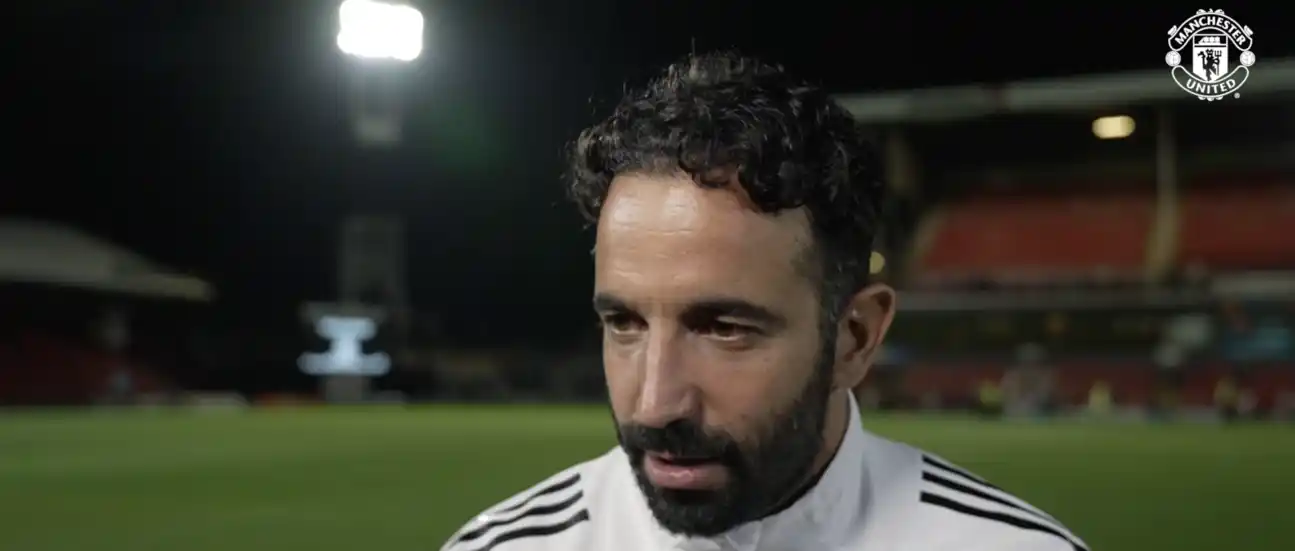
“Sometimes I want to quit, sometimes I want to be here for 20 years.”
— Ruben Amorim, referring to his comments after the Grimsby defeat
The festive period became the turning point in Amorim’s tenure. For months, the club had known it would lose key players Mbeumo, Amad, and Mazraoui to the Africa Cup of Nations (AFCON) across December and January, and that United would need to adapt without them. The mood had already soured after a damaging 0–1 home defeat to Everton—made worse by the fact Everton had been down to 10 men from the 15th minute.
Underlying tensions between Amorim and the club’s hierarchy began to simmer. It was public knowledge that Antoine Semenyo, a player that United had approached to sign in the summer, had a £65m release clause that could be activated in January. United approached Semenyo again, but the player chose to join Manchester City instead. Amorim had hinted that he expected the club to make signings in January, but after Semenyo’s decision, he seemed to indicate that there would be no transfer activity in January after all.
“If we have to play a perfect 3-4-3, we need to spend a lot of money and we need time.”
_“I’m starting to understand that that is not going to happen. So, maybe I have to adapt.”5
— Ruben Amorim, 24. December 2025
United saw the opportunity to sign Semenyo by triggering his release clause as a one-off - an opportunity to sign a target who they already wanted anyway. After Semenyo’s decision to join City instead, the £65m which would have been spent on Semenyo was not reallocated to any other targets. This was a cause of friction, with Amorim publicly saying as much.
United’s last game before Amad and Mbeumo headed to AFCON, with Mazraoui having already departed, was a home match against Bournemouth. United had unexpectedly started the game with a four-at-the-back formation, and the attacking style of play was electric. Defensive issues still persisted, though, and what some coined as the Premier League’s match of the season to that point ended in a 4-4 draw. If United could build on this attacking display, there was hope for the rest of the season.
The following game was away at Aston Villa, who had been in great form. Despite a 2-1 loss, United had again played well, and arguably deserved more, having conceding two wonderstrikes. Boxing Day saw United host Newcastle at home, winning the game 1-0. United were hanging on for dear life in the second half, but ultimately secured the three points.
“No one, not even the Pope, will change my system. This is my life.”
— Ruben Amorim, September 2025
United’s next fixture was against bottom-of-the-league Wolves, who at this point had only scored two points, and whom United had comfortably beat 1-4 away just a few weeks earlier. If there was ever to be a routine win for United and an opportunity for momentum, this was it. However, United had reverted to a three-at-the-back formation, and their terrible performance in the 1-1 draw was reminiscent of the Europa League final, Grimsby, and Everton.
“I don’t want to talk about that. I just focus on the Leeds game. But you are very smart, so…”
— Ruben Amorim, in the Leeds United pre-match press conference, when asked if something had changed about the January transfer budget
Following the Wolves game, Wilcox, who in the summer had been promoted to Director of Football, approached Amorim about why he reverted to the three-at-the-back system, given the success United had shown in the previous few games with a four-at-the-back. Amorim did not take kindly to this meeting, which ultimately sealed that his time at United would come to an end.
Shortly after the meeting, and perhaps knowing that it was going to come to an end, Amorim attended the pre-match press conference for the Leeds United game, and journalists could sense something wasn’t right.
“I just want to say that I came here to be the manager of Man United not the head coach. That’s going to finish in 18 months and then everyone is going to move on. That’s the deal, that’s my job.”
“It’s going to be like this for 18 months or when the board decide to change. So that was my point. I want to finish with that. I’m not going to quit. I will do my job until the other guy is coming here to replace me.”
— Ruben Amorim, after the Leeds draw
After the Leeds match, Amorim made pointed comments about being the “manager” rather than the “coach” of United, revealing at his frustration with the power structure at the club. He demanded that the recruitment department, and the sporting director, referring to Wilcox, “do their job,” a public criticism that proved to make his position at the club untenable.
On the morning of 5 January 2026, Amorim was called to a meeting at United’s Carrington training ground with Berrada and Wilcox, where he was informed that his services were no longer required. His 14-month tenure had come to an abrupt end, leaving Manchester United once again searching for a new direction.
The statistics from Amorim’s time at United make for sobering reading. In 47 Premier League matches, he won just 15, lost 19, and drew 13, giving him a win rate of less than one-third. He became the fastest manager in Premier League history to reach 15 defeats, achieving this unwanted milestone in just his 28th league game. His final match completed a run of 15 consecutive away Premier League games without a clean sheet for United.
As Manchester United finds itself in the familiar position of searching for yet another manager, the questions surrounding the club’s direction have only intensified. The Amorim era, which began with such promise and hope, has ended in the same manner as so many previous appointments: with disappointment, recrimination, and uncertainty about the future.
https://www.theguardian.com/football/2018/aug/11/manchester-united-director-of-football ↩︎
https://www.manutd.com/en/news/detail/man-utd-official-statement-on-cristiano-ronaldo-22-november-2022 ↩︎
https://www.manutd.com/en/news/detail/man-utd-announces-process-to-explore-strategic-alternatives-to-enhance-club-growth ↩︎
https://www.imust.org.uk/Blog/Entry/an-open-letter-to-the-glazer-family ↩︎
https://www.espn.com/soccer/story/_/id/47492587/man-united-ruben-amorim-refuses-clarify-money-claim ↩︎